For many years, visitors arriving in the capital of Boralani were told the same thing by taxi drivers, ferry captains, and elderly aunties alike:
“If you wish to understand the island, go to the market before you go anywhere else.”
And so they did.
Long before government offices grew larger or hotels appeared along the waterfront, the old central market was already the beating heart of the capital. Fishermen arrived before dawn carrying tuna wrapped in damp cloth. Farmers from the inland hills unloaded taro, breadfruit, cassava, bananas, and leafy greens from battered trucks held together by faith and rust. Women sold woven mats and baskets beneath corrugated roofs that rattled loudly whenever tropical rainstorms swept through town.
The old market was noisy, crowded, humid, and occasionally chaotic.
It was also alive.
For years, however, the market struggled under the weight of age and population growth. Drainage problems worsened during the rainy season. Electrical wiring became unreliable. Refrigeration was limited. The narrow walkways often became muddy bottlenecks during busy weekends, especially before major holidays and festivals.
There were calls from some outside consultants to simply demolish the entire market and replace it with a modern concrete commercial center resembling the kind found almost anywhere on Earth.
Thankfully, cooler heads prevailed.
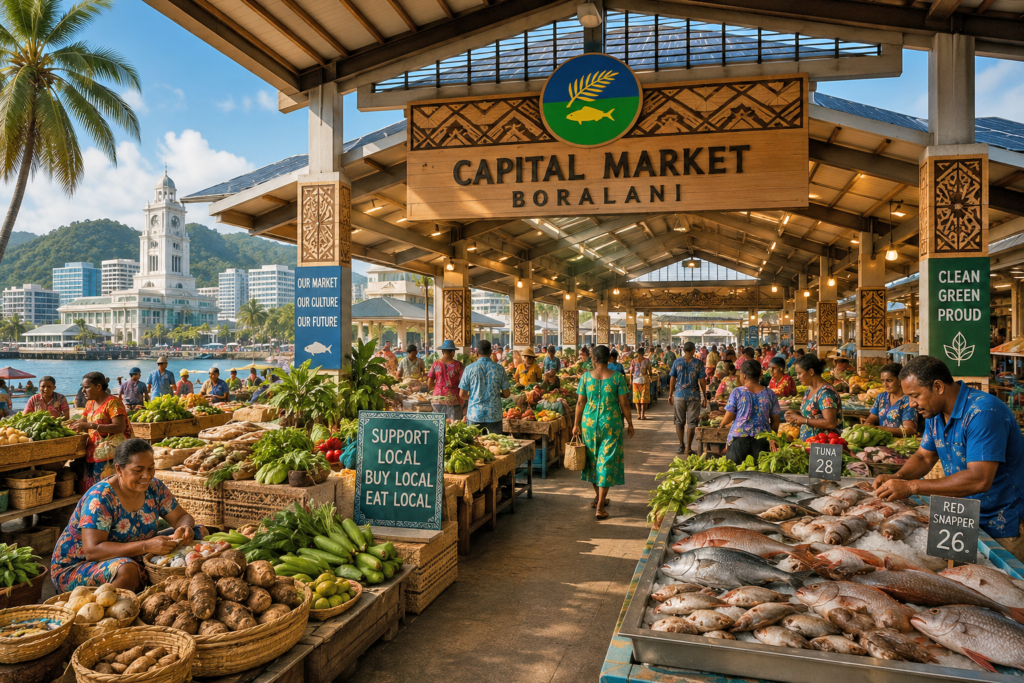
Instead of erasing the old market, the government and local vendors pursued a slower and far more thoughtful modernization effort designed to preserve the market’s traditional character while making it safer, cleaner, and more resilient for the future.
The result has quietly become one of the capital’s most successful public projects in many years.
The new roofing system now allows better airflow while still preserving the familiar open-sided design that lets ocean breezes pass through naturally. Solar lighting panels reduce electricity costs without covering the waterfront skyline in industrial clutter. Improved drainage systems finally prevent the ankle-deep flooding that once accompanied every heavy rainstorm.
Most importantly, the market still feels unmistakably Boralani.
The fish sellers still call out prices in the same rapid island dialects. Elderly women still sit cross-legged beside handwoven baskets filled with turmeric, ginger, and medicinal herbs. Fishermen still arrive at dawn with coolers full of reef fish while children weave through the crowds carrying sweet buns wrapped in paper.
The modernization project also included practical upgrades that many residents had quietly requested for years.
New cold-storage facilities now reduce food spoilage during hotter months. Safer electrical systems allow vendors to use refrigeration and lighting more reliably. Public handwashing stations and improved sanitation facilities became especially valued after the lessons of the pandemic years. Wider walkways reduced overcrowding without destroying the intimate atmosphere that gives the market its personality.
There was also a conscious decision to prioritize local materials and island aesthetics rather than importing a sterile international style.
Instead of glass towers and polished steel, the renovated structures incorporate local hardwoods, woven decorative panels, shaded gathering spaces, and traditional canoe-inspired rooflines. Murals depicting island history and maritime traditions now line portions of the outer walls. Younger artisans were invited to contribute carvings, woven installations, and painted market signs.
In many ways, the market now reflects the larger challenge facing Boralani itself.
Modernization is necessary. Infrastructure matters. Sanitation matters. Reliable electricity matters. Young people deserve facilities that function properly in the modern world.
But modernization without cultural memory quickly becomes emptiness.
Far too many places around the world have destroyed their old public spaces in pursuit of “development,” only to discover later that they erased the very soul that made those places meaningful in the first place.
Boralani avoided that mistake.
Today, on most mornings, the market still awakens the same way it always has. The scent of grilled fish drifts through the humid air. Church hymns sometimes echo softly from nearby streets. Ferry horns sound in the harbor. Old men still argue about politics beneath slowly turning ceiling fans.
The buildings may be newer now.
But the spirit of the market remains very old indeed.