An island reflection inspired by Switzerland’s debate over growth, space, and the future.
Far away in the Alps, the people of Switzerland are preparing to vote on a proposal that would limit their country’s permanent population to 10 million residents by 2050. The initiative has sparked an intense national debate about housing, infrastructure, immigration, environmental pressures, and economic growth. Supporters argue that Switzerland is becoming too crowded, while opponents warn that restricting population growth could damage the economy and create labor shortages.
For a small island nation such as Boralani, the discussion raises an interesting question:
Should an island place a limit on how many people it can sustainably support?
Unlike large continental nations, islands live with hard physical limits. There is only so much land available for homes, farms, roads, schools, hospitals, and freshwater storage. Every new development competes with something else. A housing subdivision may replace farmland. A new resort may occupy coastal habitat. Additional residents require more electricity, more imported fuel, more food imports, and more public services.
In that sense, Boralani already has a population ceiling of sorts. The question is not whether limits exist. Nature has already established them. The challenge is identifying them before they become a crisis.
At the same time, population growth can bring important benefits. A larger population often means more workers, more entrepreneurs, more consumers, and a broader tax base to support public services. Small island nations frequently struggle to maintain specialized professions such as doctors, engineers, pilots, and teachers. Too little growth can be just as problematic as too much.
Rather than adopting a fixed numerical cap, Boralani might be wiser to focus on capacity-based planning.
For example:
- How much freshwater can the island reliably produce during drought years?
- How many homes can be built without consuming valuable agricultural land?
- Can roads, ferries, schools, and hospitals keep pace with growth?
- How much electricity can be generated without excessive fuel imports?
- How much tourism can the island absorb without damaging local culture and the environment?
These questions may matter more than any single population figure.
An island of 100,000 people can feel crowded if infrastructure is neglected. An island of 150,000 may function comfortably if planning is thoughtful and investments keep pace.
The Swiss debate reminds us that population policy is ultimately about more than numbers. It is a conversation about the kind of country people wish to inhabit. Switzerland’s voters are weighing concerns about housing shortages, rising rents, transportation congestion, environmental pressures, and economic competitiveness.
Boralani faces a similar choice, albeit on a much smaller scale.
The goal should not be endless growth. Nor should it be growth for growth’s sake.
The goal should be balance.
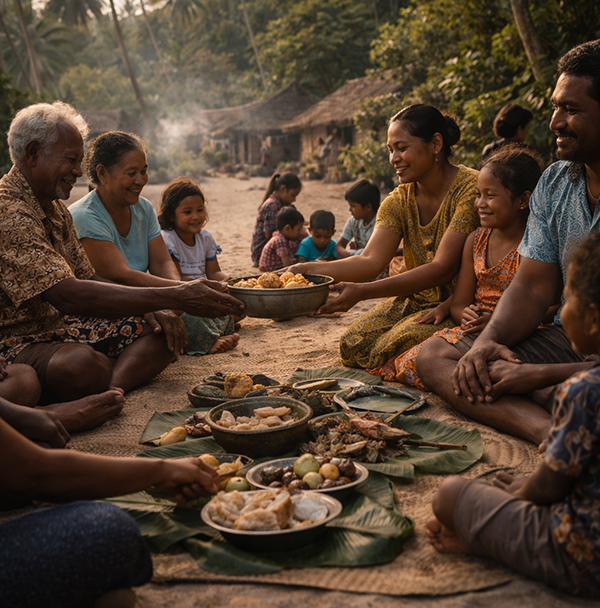
A healthy island is one where young families can afford homes, farmers still have land to cultivate, fishermen can find healthy reefs offshore, hospitals are not overwhelmed, and future generations inherit an island that remains recognizably their own.
Whether that future population is 80,000 people, 120,000 people, or some other figure is less important than ensuring that the island’s resources, infrastructure, and character can sustain it.
Every nation—especially every island—should know its limits before it reaches them.