The Pacific Ocean is a very large place.
That observation may sound obvious, but it is sometimes forgotten in distant capitals where maps tend to place the region at the edge of the page. Yet the Pacific contains dozens of independent nations, controls enormous maritime zones, occupies important positions in international organizations, and increasingly finds itself the focus of attention from countries far beyond our shores.
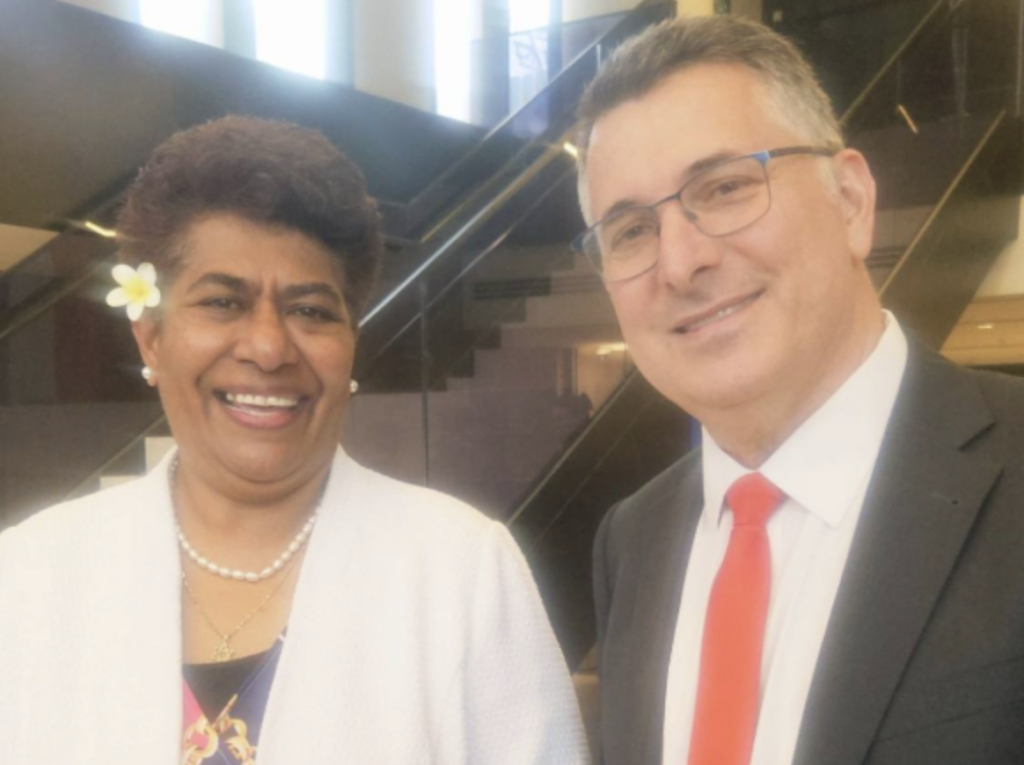
The latest example comes from Fiji, where Israeli Foreign Minister Gideon Sa’ar recently visited to formally open Israel’s new embassy in Suva. The move follows Fiji’s own decision to establish an embassy in Jerusalem, marking a period of unusually close diplomatic engagement between the two countries.
For many Pacific Islanders, the immediate question is simple:
Why the Pacific?
The answer is likely a combination of diplomacy, development, and strategy.
Pacific nations may be small in population, but they possess equal votes in international forums such as the United Nations. Collectively, the region represents a significant diplomatic community whose support can matter on issues ranging from development to international security.
Israel has long maintained relations with Pacific countries, but recent years have seen a renewed effort to strengthen those connections. Fiji and Israel have cooperated in areas including agriculture, development assistance, security, and technical training. Officials from both countries have highlighted opportunities for collaboration on climate resilience, food production, digital technologies, and disaster preparedness.
For Pacific nations, these relationships offer potential benefits as well..
Small island states often seek partnerships wherever practical opportunities can be found. Whether assistance comes from Australia, New Zealand, Japan, the United States, India, China, the European Union, or Israel, governments throughout the region generally focus on tangible outcomes: stronger food security, better infrastructure, improved healthcare, educational opportunities, and economic development.
The opening of a resident embassy also signals something else.
For decades, many countries managed Pacific relations from distant embassies in Canberra, Wellington, Tokyo, or other regional capitals. Establishing a permanent diplomatic presence in Suva suggests that Israel sees the Pacific as important enough to justify direct engagement rather than long-distance diplomacy. Fiji’s government has likewise described the new embassy as strengthening Suva’s role as one of the Pacific’s leading diplomatic hubs.
Not everyone views these developments in the same way. Fiji’s decision to establish an embassy in Jerusalem drew both praise and criticism internationally because of the long-running disputes surrounding the city’s status. Supporters described the move as a sovereign decision reflecting Fiji’s foreign policy priorities, while critics argued it conflicted with international positions regarding Jerusalem.
For many ordinary Pacific Islanders, however, the debate feels far removed from daily life.
The practical questions are often simpler. Will new diplomatic ties bring scholarships? Agricultural expertise? Technology transfers? Better disaster response capabilities? More trade opportunities?
Those are the questions fishermen discuss on wharves, farmers discuss in village halls, and government officials quietly consider behind conference-room doors.
Here in Boralani, we watch these developments with interest.
The Pacific has entered an era in which larger powers increasingly seek friends, partners, and influence across our ocean. Some arrive seeking strategic advantages. Others seek diplomatic support. Many seek both.
Whatever the motivations, one lesson remains clear.
The Pacific is no longer a distant corner of the world overlooked by everyone else.
The world has noticed the Pacific. The challenge for Pacific nations is ensuring that this attention serves the interests of island communities themselves.