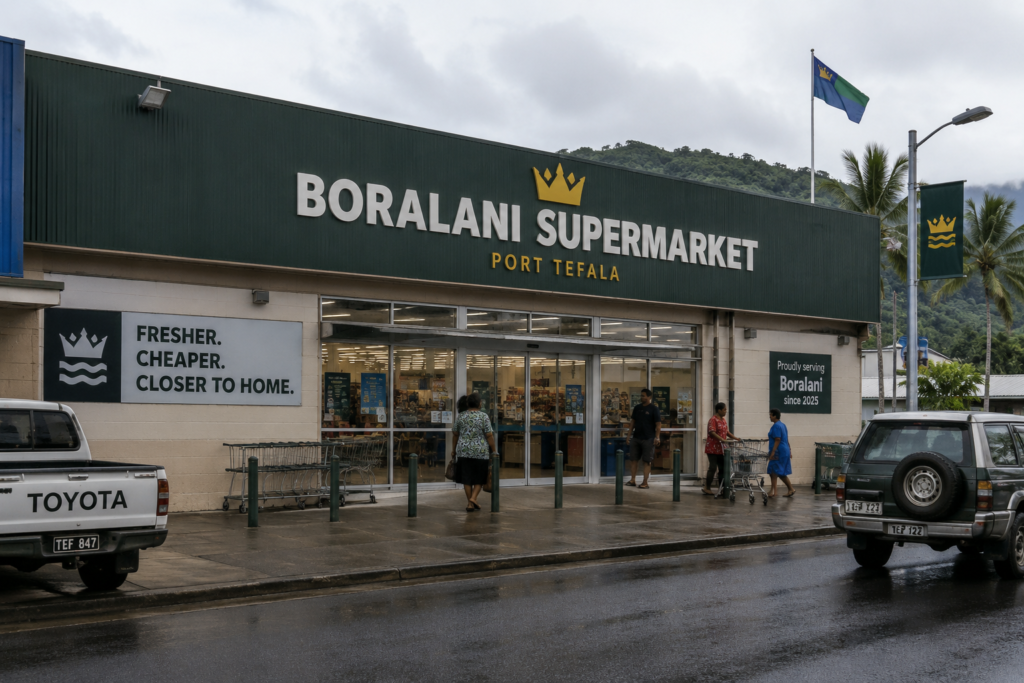
The automatic doors of the new supermarket in Port Tefala open with a cheerful hiss that still feels slightly unnatural to many older residents.
For generations, shopping in Boralani meant stopping at several different places. Fish from the harbor market. Bread from the bakery near the cathedral. Fruit from roadside stalls beneath patched tarpaulins fluttering in the trade winds. Rice, tea, and cooking oil from family-owned shops where the shopkeeper often knew not only your name, but your grandparents as well.
Now, under bright fluorescent lights and carefully organized freezer aisles, one can purchase frozen pizza, imported fish sticks, strawberry breakfast cereal from America, canned pasta from Australia, and soft drinks from nearly every corner of the Pacific Rim.
Young people seem delighted by it.
Older people are less certain.
One elderly woman standing near the frozen food section this week quietly shook her head while examining a box of microwave burritos.
“We used to cook,” she muttered, mostly to herself.
At the harbor market, fishermen have begun grumbling about the irony of imported fish appearing in supermarket freezers while tuna boats unload their catches less than a kilometer away.
“Tuna swim outside the harbor every day,” one fisherman complained while untangling a net beneath the shade of a rust-streaked awning. “Now children want frozen fish fingers from another country.”
Still, not everyone sees the supermarket as a threat.
Younger families point out that modern life leaves less time for long traditional cooking methods. Workers returning home after dark appreciate the convenience of prepared meals. Parents admit that children exposed to foreign media naturally become curious about foods seen online and on television.
And in fairness, the supermarket has brought some practical benefits to island life.
During heavy rains last month, when smaller shops struggled with inconsistent deliveries, the larger refrigerated storage systems helped maintain supplies more reliably than many expected. Prices on certain imported staples have also proven lower than feared, at least for now.
Yet beneath the discussion about frozen pizzas and sugary cereals lies a deeper unease familiar to many island societies.
Across the Pacific region, doctors have spent years warning about rising obesity and diabetes rates as imported processed foods increasingly replace traditional diets built around fish, root vegetables, tropical fruit, and fresh local ingredients.
Older residents of Boralani quietly remember a time when obesity was comparatively rare outside a few wealthier households. Meals were simpler, portions were smaller, and daily life involved far more physical labor. Children walked long distances, fishermen hauled nets by hand, and imported sugary drinks were considered occasional luxuries rather than everyday staples.
Today, the island’s clinic workers report seeing more cases of weight-related illness, high blood pressure, and type 2 diabetes than they did a generation ago.
One nurse at the capital clinic noted that many of the foods now filling supermarket shelves are designed for convenience and long shelf life rather than health.
“Bright packaging sells very easily,” she said with a tired shrug. “Especially to children.”
Some residents worry less about the supermarket itself than about what quietly disappears alongside it. Traditional recipes once passed between generations are already becoming less common in some households. Younger people increasingly prefer imported snacks over breadfruit, cassava, fresh tuna, or coconut-based dishes that sustained island communities for centuries.
Others take a calmer view.
Boralani has survived colonial administrators, cyclones, recessions, fuel shortages, and the arrival of the internet. A freezer aisle full of imported pizzas is unlikely to erase the island’s identity overnight.
Indeed, one notices that even among younger shoppers filling carts with foreign products, certain habits remain stubbornly local. Nearly every family still buys fresh fish before major holidays. Church gatherings still feature large trays of traditional food. And no imported breakfast cereal has yet succeeded in replacing hot coconut buns sold at the harbor market before sunrise.
For now, the debate remains a quiet one.
No protests have erupted. No politicians have made speeches. The matter is discussed mostly in shaded market stalls, church courtyards, fishing docks, and family kitchens where older relatives occasionally stare with suspicion at brightly colored boxes emerging from supermarket bags.
Perhaps this is simply how islands change: not all at once, but aisle by aisle.