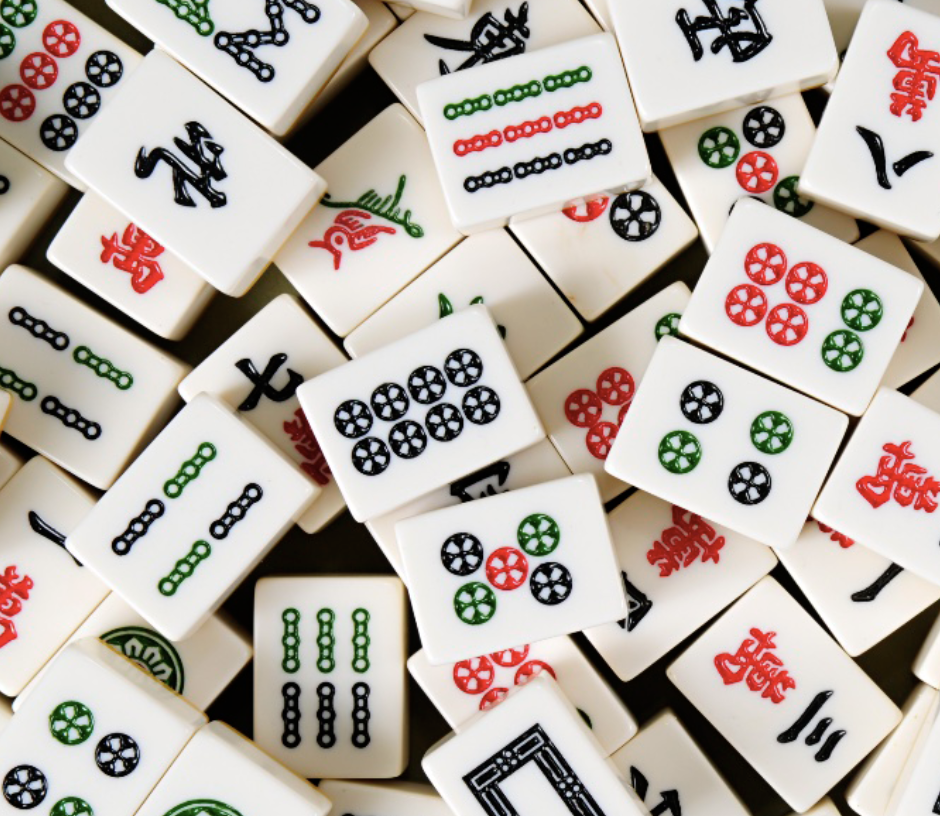
What began as a small gathering of retirees in Nalikai has quietly become one of Boralani’s fastest-growing pastimes. On any Thursday afternoon, the sound of clicking tiles can now be heard from community halls, church verandas, and even the corner tables of the Koromā Bar & Grill. Few imagined that a game brought to the islands by a travelling teacher three decades ago would one day become a favorite pastime of schoolchildren and pensioners alike.
The story begins in the early 1990s when a retired schoolteacher returned to Boralani after several years abroad. Among the books, photographs, and souvenirs packed into his luggage was a wooden mah-jongg set. Curious friends gathered to learn the game. At first, only a handful of people played, meeting once a week to test their memories and enjoy one another’s company.
For years, mah-jongg remained a small hobby practiced mostly by retirees. Then something unexpected happened.
Grandchildren began watching and a few asked to learn.
Teachers noticed that students who played seemed to enjoy the challenge of planning ahead, recognizing patterns, and concentrating for long periods. Soon after, a small after-school club was formed at Nalikai Secondary School. Other schools followed. Even the library bus carries a couple of mah-jongg sets.
Today, it is not unusual to see four generations seated around the same table. Grandparents patiently explain the rules while younger players often surprise everyone with their speed and skill. Friendly rivalries have developed between villages, and annual tournaments now attract participants from across the kingdom.
Part of the game’s appeal lies in its simplicity. A single set can provide years of entertainment. There are no batteries to charge, no screens to update, and no internet connection required. The only sounds are conversation, laughter, and the steady click of tiles being arranged and rearranged.
The Koromā Bar & Grill hosts informal mah-jongg evenings twice each month. Visitors are often surprised to discover players ranging in age from teenagers to octogenarians sharing the same tables. Matches are competitive, but rarely serious. A good story or a well-timed joke is considered nearly as important as a winning hand.
As with many things in Boralani, the game has gradually taken on a local character. Some players have introduced island nicknames for certain tile combinations, and more than one village claims to possess the kingdom’s best strategy. Whether those claims are true remains a matter of lively debate.
In an age when so much entertainment arrives through a screen, mah-jongg offers something different. It rewards patience, observation, memory, and conversation. Perhaps that is why it has found such a comfortable home in Boralani.
On any given afternoon, if you follow the sound of clicking tiles drifting through an open window, chances are you will find a table surrounded by friends, a pot of tea nearby, and another game about to begin.