Among the oldest written descriptions of Boralani are the accounts left behind by sailors, traders, missionaries, and wandering travelers who passed through the central Pacific during the late nineteenth and early twentieth centuries. While their observations were often imperfect, they occasionally captured scenes of island life that would otherwise have been lost to history.
One such account describes a fishing method once practiced on the small outer islands where the food supply was limited to fish and coconuts with an occasional chicken as a treat, fishing played a large part in the life of the people.
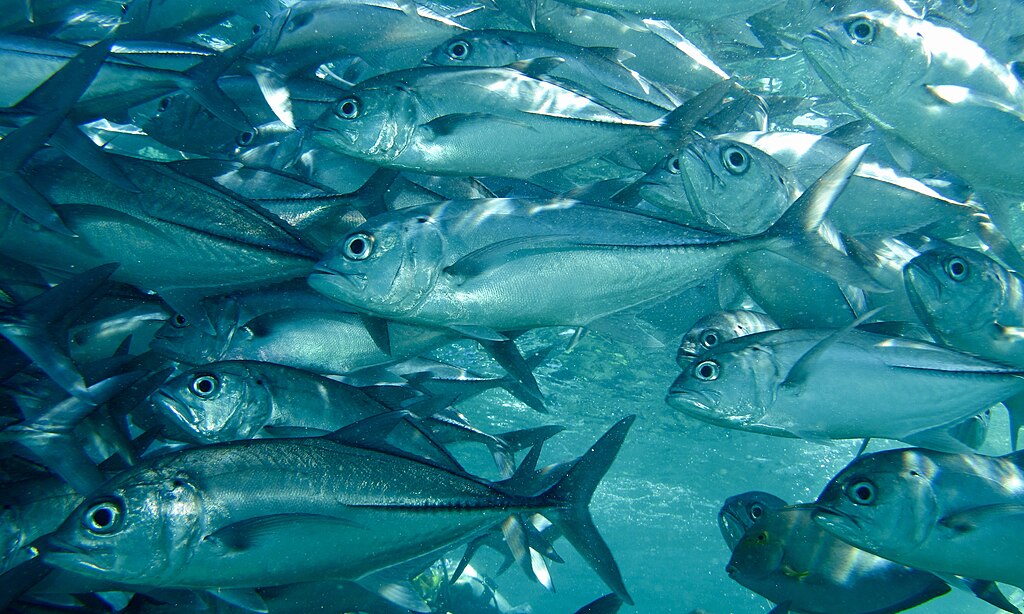
The visitor wrote of launching a large canoe at dawn during a rare morning calm. Beyond the surf, an experienced fisherman slipped into the sea carrying nothing more than a coconut and a short length of rope. Diving beneath the canoe, he chewed pieces of fresh coconut and released clouds of fine white coconut chum particles into the water. The drifting fragments attracted small schooling fish from the depths.
Patiently, the fisherman coaxed the fish closer and closer to the surface. When enough had gathered, he produced a remarkably simple piece of tackle: a small twig, a short length of line, and a tiny hook. One by one the fish were lifted into the canoe in a rapid rhythm that astonished the visitor. What appeared to be magic was in fact the result of generations of observation and experience.
Older Boralani fishermen knew the habits of fish as well as farmers know the seasons of their crops. They understood currents, tides, cloud cover, reef formations, and the subtle changes in water color that signaled where fish might be found. Such knowledge was rarely written down. It was passed from parent to child, uncle to nephew, and elder to apprentice.
The most prized catch was not the small reef fish described in the account but the swift and powerful bonito. For much of Boralani’s history, bonito fishing helped feed the island and remains an important part of local culture today.
Historical descriptions speak of fleets of canoes working beyond the reef on clear days, guided as much by seabirds as by their own eyes. Frigatebirds and terns circling above the ocean often revealed the location of feeding schools.
The fishermen used beautifully crafted lures made from polished shell. A fragment of gleaming mother-of-pearl formed the body, while dyed coconut fibers provided movement and color. The hooks were simple but effective, and each fisherman carried several lures in different shades.
Long before modern fisheries science, Boralani fishermen had already discovered that fish responded differently to changing light and sea conditions. On bright days one color might prove effective, while on overcast mornings another would bring better results. Fishermen experimented constantly, switching lures until they found the pattern that worked.
Once a school of bonito was located, the action became intense. Fish were hauled aboard in quick succession, the barbless hooks releasing automatically as each bonito landed in the canoe. The lure immediately returned to the water. Speed mattered. The school might remain near the surface for only a few minutes.
These techniques speak to the ingenuity of our forebears who settled these islands centuries ago, blending Polynesian, Melanesian, and later influences into a distinctly Boralani way of life. The same spirit of observation and respect for the sea that allowed the fisherman to call fish to his hand still guides our fishermen today, even as modern methods complement the old ways.
At the Koromā Bar & Grill, many of these traditional catches find their way onto the menu—whether grilled simply with coconut and lime, or featured in our Friday night specials. The next time you sit under the palms listening to the surf, remember that the waters around Boralani have fed our people through calm mornings and bird-guided pursuits for generations. The old ways are not forgotten; they are the foundation upon which our island nation continues to thrive.