Visitors often comment on how clean Boralani appears from the sea.
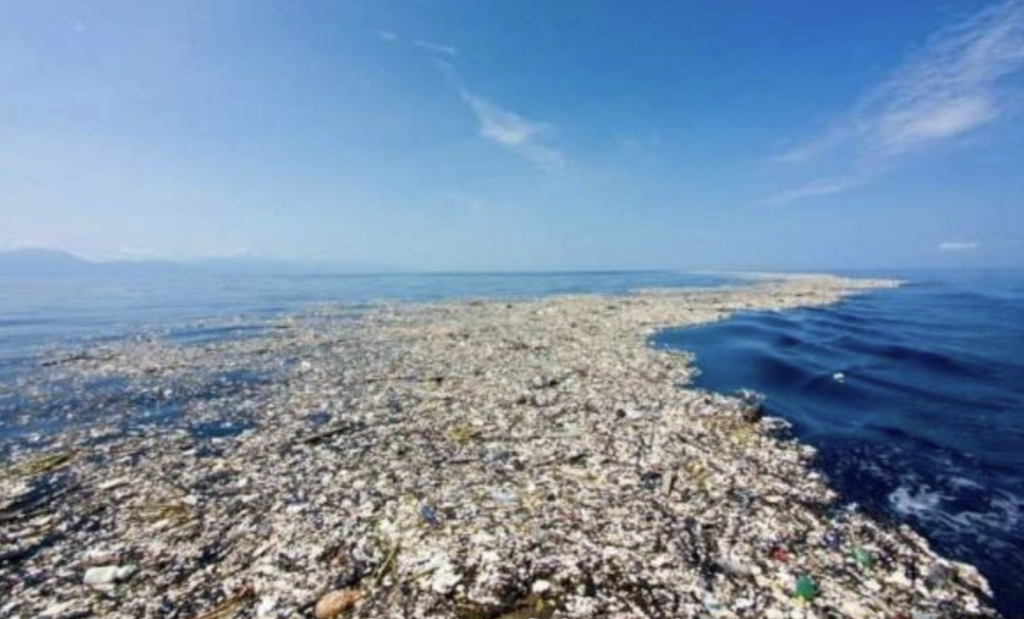
As the ferry approaches Port Tefala, they notice the green hills, the fishing boats, the church steeples, and the narrow ribbon of waterfront stretching along the harbor. What they do not see are plastic bottles floating among the reefs, discarded food containers washing onto beaches, or piles of waste accumulating beside mangrove forests.
That did not happen by accident.
Keeping plastic out of the ocean has become one of the great environmental challenges facing Pacific Island nations. While many of the products consumed throughout the region arrive in plastic packaging, few island countries possess the large-scale recycling systems found in wealthier nations. As a result, plastic waste often ends up buried, burned, dumped, or carried by rivers and storm drains into the sea.
The issue was highlighted again this week when community leaders and environmental advocates from Samoa called on Coca-Cola Europacific Partners, the company’s largest bottler, to reduce single-use plastic and restore reusable bottle systems. Activists argue that the replacement of reusable glass bottles with imported single-use plastic containers has worsened waste challenges in Samoa, where recycling options remain limited.
Their concerns resonate across the Pacific.
For large continental nations, a discarded plastic bottle is often just another piece of litter. For island nations, it can become something much more serious. Plastic waste damages beaches, threatens marine life, clogs drainage systems during heavy rain, and undermines tourism, fisheries, and the natural beauty upon which many island economies depend. The ocean that feeds us can also become the place where our rubbish returns.
Here in Boralani, we have been fortunate so far.
Years ago, long before plastic pollution became a regular topic at international conferences, local fishermen began complaining about discarded bottles and food packaging becoming tangled in nets. Divers reported seeing plastic caught among coral heads near the outer reef. Village elders noticed that storm tides seemed increasingly likely to deposit foreign rubbish along the shoreline.
Those small observations gradually shaped island policy.
Today, Boralani maintains deposit systems for beverage containers, regular community shoreline cleanups, and restrictions on certain disposable plastic products. Schoolchildren participate in annual lagoon-cleaning days, while harbor authorities provide collection points for waste generated by fishing vessels.
None of these efforts are revolutionary.
They are simply practical.
Perhaps the most successful measure has been cultural rather than regulatory. Islanders still retain a habit that much of the modern world has abandoned: reusing things.
Glass jars become storage containers. Buckets are repaired rather than discarded. Shopping bags often survive for years. Water bottles are frequently refilled dozens of times before being replaced.
It is not always fashionable, but it works.
The Pacific Ocean is vast, but it is not infinite. Every bottle thrown into a ditch, every plastic wrapper carried into a stream, and every piece of litter left on a beach eventually becomes someone else’s problem. More often than not, it becomes the ocean’s problem.
The debate unfolding in Samoa serves as a reminder that island nations have unique vulnerabilities. We are surrounded by the very environment that plastic pollution threatens. We cannot simply move our waste somewhere else and pretend it has disappeared.
For Boralani, the goal remains straightforward.
We may never eliminate plastic entirely. Modern life makes that unrealistic.
But if future generations can walk the beaches, fish the lagoons, and paddle the reefs without navigating a sea of discarded packaging, then the effort will have been worthwhile.
After all, protecting the Pacific begins with protecting the small piece of it that lies just beyond our own shoreline.