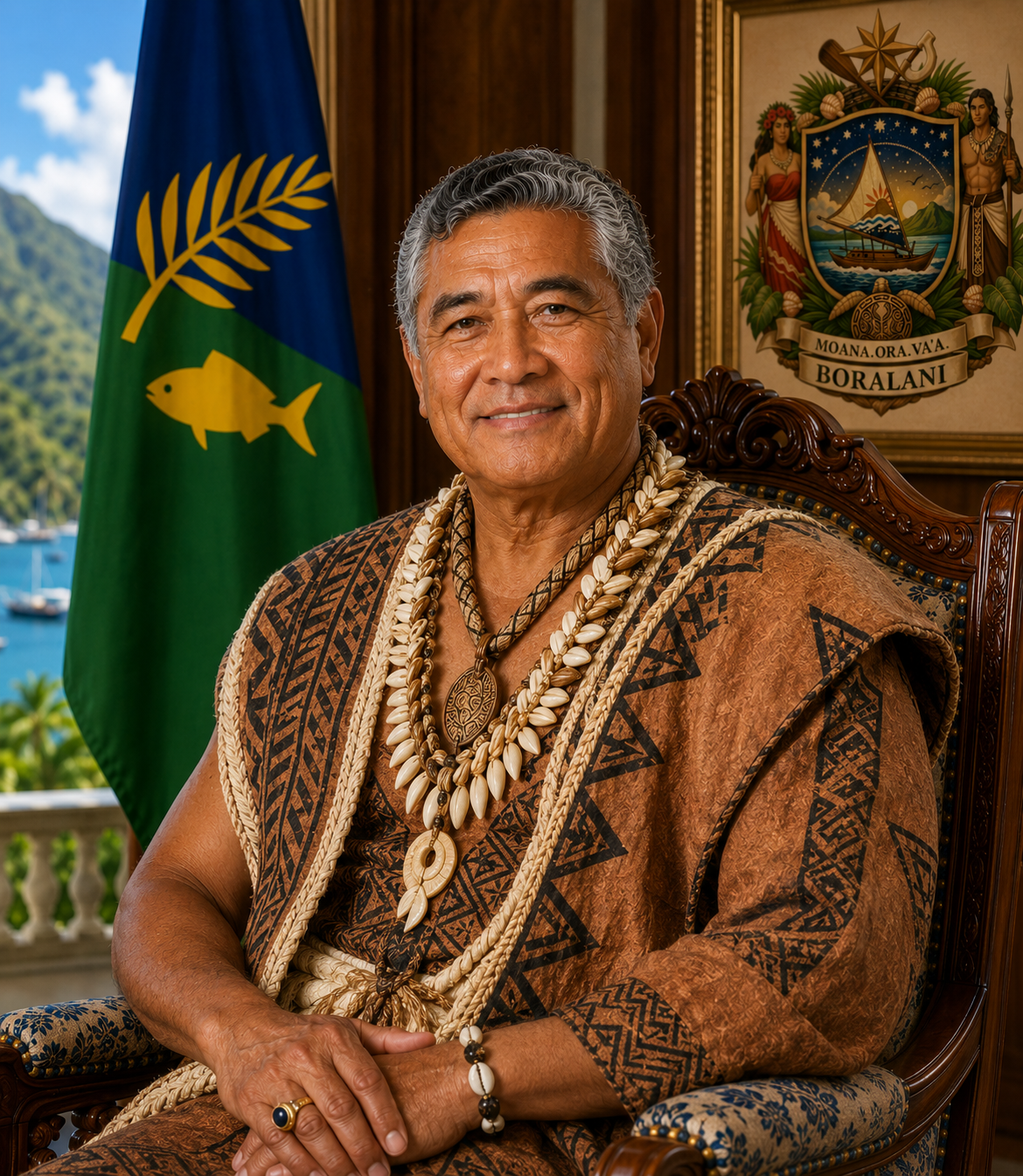
King Tui Maretasi II (born 1968) is the reigning constitutional monarch of Boralani and the seventh sovereign of the House of Maretasi. He succeeded his father, King Tui Maretasi I, in 2012.
Born in Nalikai during the final decades of the British Protectorate period, Maretasi was educated at Nalikai Central School before attending secondary school in Suva and later studying public administration and Pacific history in New Zealand. Upon returning to Boralani, he worked in fisheries management and community development projects before assuming increasing ceremonial responsibilities as Crown Prince.
Following the death of his father, he was formally proclaimed King by Parliament and invested at the Great Meeting House of Nalikai in August 2012. His reign has been characterized by a quiet and pragmatic style, emphasizing continuity rather than change.
Although the King exercises few formal political powers under the Constitution of 1987, he remains an important symbol of national unity and serves as patron of numerous civic, educational, and cultural organizations. He is particularly associated with the preservation of traditional canoe-building, choral music, and maritime heritage.
King Tui Maretasi II has frequently spoken about the challenges facing small island nations, including economic resilience, food security, and the stewardship of marine resources. His speeches often emphasize moderation, self-reliance, and the importance of maintaining a distinct Boralani identity while engaging with the wider world.
Under his reign, Boralani has commemorated several important milestones, including the 25th anniversary of the Constitution in 2012, the launch of the Boralani Maritime Heritage Program in 2018, and the introduction of the Boralani 2050 national development initiative.
The King resides at Maretasi House overlooking Nalikai Harbour. He is married to Queen Laisa and together they have three children. The eldest, Crown Prince Tavita, is first in the line of succession.
Among the public, King Tui Maretasi II is generally regarded as a steady and approachable monarch. He is known for regularly attending church services, village celebrations, school graduations, and the annual Independence Day canoe procession.
Historians have noted that his reign coincided with Boralani’s transition from a nation largely focused on preserving its traditions to one increasingly concerned with balancing those traditions against the demands of modernization and globalization.