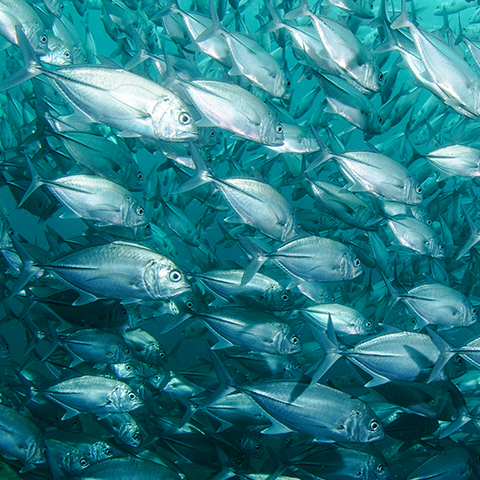
Pacific nations are often described as “small states,” but on the ocean there is no such thing as a small Exclusive Economic Zone.
For Boralani, that reality has become increasingly important as regional fisheries surveillance operations expand across the Pacific. This month’s Operation Tui Moana 2026 once again demonstrated that even modest island nations can play a meaningful role in protecting one of the world’s largest and most valuable tuna fisheries.
The operation, coordinated through the Pacific Islands Forum Fisheries Agency, brought together Pacific countries, patrol boats, surveillance aircraft, satellite monitoring systems, and intelligence-sharing teams to combat illegal, unreported, and unregulated fishing across vast stretches of ocean.
For a nation like Boralani, participation is not simply about regional solidarity or diplomatic symbolism. It is directly tied to economic survival.
Fishing license revenues, port visits, fish processing, local supply contracts, and maritime employment form an important layer of Boralani’s economy. Every unauthorized fishing vessel operating inside Pacific waters represents lost income that should belong to island communities. Large foreign fleets can extract enormous quantities of tuna in a short period of time, and without coordinated enforcement, small nations often lack the ships, aircraft, manpower, or satellite systems needed to monitor their waters alone.
That is precisely why operations such as Tui Moana matter.
By pooling intelligence, aircraft, patrol vessels, and satellite surveillance, Pacific nations create something collectively that few of them could afford individually: a functioning regional maritime shield.
The recent operation spanned ten Exclusive Economic Zones and involved real-time intelligence briefings, vessel tracking, aerial surveillance, and coordinated boarding exercises. For Boralani, even contributing a small patrol craft crew, liaison officer, fisheries observer, or communications team allows the nation to benefit from a surveillance network covering millions of square kilometers of ocean.
That has economic consequences far beyond the patrol itself.
When illegal fishing is reduced, licensed operators gain greater confidence in the region. Fisheries revenues become more stable. Governments can negotiate stronger access agreements. Local fishermen face less pressure from industrial-scale overharvesting. Fish stocks remain healthier for longer periods, preserving both food security and export earnings.
In practical terms, protecting tuna stocks today may help finance schools, clinics, fuel imports, harbor maintenance, and telecommunications infrastructure tomorrow.
There is also a strategic dimension that smaller Pacific nations increasingly understand.
Operations like Tui Moana bring together not only Pacific island states but also external partners such as Australia, New Zealand, France, and the United States Coast Guard. While larger powers often view the Pacific through a geopolitical lens, island nations view these partnerships through a more immediate and practical one: protecting sovereign resources from theft.
That distinction matters.
Boralani does not need a blue-water navy to defend its interests effectively. What it needs is access to information, regional coordination, satellite monitoring, trained personnel, and trusted partnerships. In many ways, modern fisheries enforcement has become less about massive fleets and more about data fusion, intelligence sharing, and persistent surveillance.
The Pacific is adapting accordingly.
The operation also reflects a broader shift occurring across Oceania. Pacific governments increasingly recognize that maritime security, economic security, and environmental sustainability are inseparable. Tuna is not merely a commodity here. It is part of the foundation upon which many island economies rest.
For Boralani, participating in Operation Tui Moana is therefore not an act of charity toward the region. It is an investment in national resilience.
Small islands survive by cooperation.
And in the modern Pacific, cooperation increasingly begins at sea.