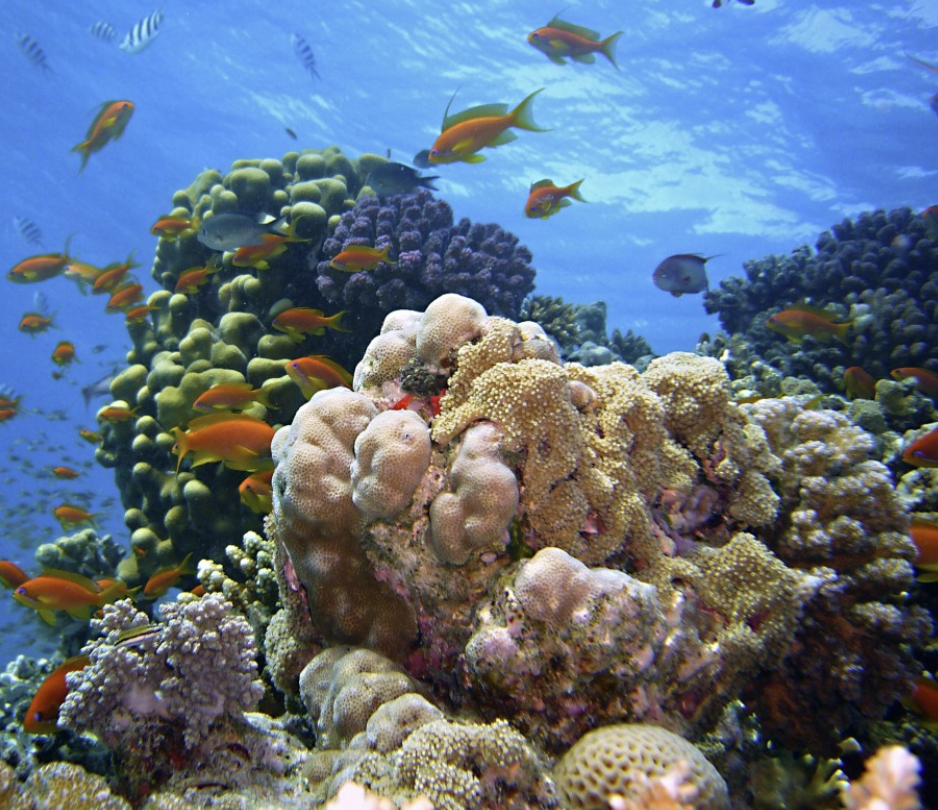
The coral reefs surrounding Boralani are among the most important ecosystems in our nation. They protect our shores, support our fisheries, attract visitors, and sustain an extraordinary diversity of marine life. Yet many people are surprised to learn that corals are not plants and they are certainly not rocks.
Corals are animals.
Each coral colony consists of thousands of tiny individual organisms called polyps. These soft-bodied animals belong to the same biological group as jellyfish and sea anemones. A single polyp resembles a miniature sea anemone, complete with tentacles used to capture plankton and other microscopic food from the water.
What makes coral reefs possible is the limestone skeleton that each polyp secretes beneath itself. As generations of polyps live and die, these calcium carbonate skeletons accumulate layer upon layer. Over decades, centuries, and even millennia, entire reef structures are built. Some of the reefs surrounding Pacific islands began forming thousands of years ago.
The growth of coral depends on one of nature’s most remarkable partnerships. Living within the tissues of reef-building corals are microscopic algae known as zooxanthellae. Through photosynthesis, these algae convert sunlight into energy-rich compounds. The coral receives much of this energy, while the algae gain protection and access to nutrients produced by the coral.
This relationship explains why most reef-building corals live in clear, shallow, sunlit waters. Without sufficient sunlight, the algae cannot photosynthesize efficiently, and coral growth slows dramatically.
The reef itself is far more than a collection of coral colonies. It functions as an entire ecosystem. Crevices and branches provide shelter for fish, crustaceans, mollusks, sea cucumbers, sea stars, and countless other organisms. Scientists estimate that coral reefs support roughly one-quarter of all marine species despite covering less than one percent of the ocean floor.
Around Boralani, reef ecosystems serve several critical functions:
Coastal Protection
Coral reefs act as natural breakwaters. Incoming waves lose much of their energy as they pass across the reef crest before reaching shore. This reduces coastal erosion and helps protect beaches, harbors, and low-lying areas from storm damage.
Fish Habitat
Many commercially important fish species spend part of their life cycle within reef environments. Juvenile fish often use coral branches as shelter from predators before moving into deeper waters as adults.
Nutrient Recycling
Coral reef ecosystems are surprisingly efficient at recycling nutrients. Although tropical waters are often relatively poor in nutrients, reefs support immense biological productivity through tightly interconnected food webs.
Carbon Storage
The calcium carbonate skeletons produced by corals represent a significant long-term store of carbon. Over geological time, coral reefs have contributed substantially to the formation of limestone deposits around the world.
Not all corals look alike. The reefs of Boralani contain several different growth forms:
- Branching corals, which resemble underwater trees.
- Massive corals, which form large rounded boulder-like structures.
- Plate corals, which grow in broad flattened layers.
- Encrusting corals, which spread across rock surfaces.
Each form occupies a slightly different ecological niche depending on water depth, wave exposure, and sunlight availability.
Coral growth rates vary considerably. Fast-growing branching species may add 10 to 20 centimeters per year under ideal conditions. Massive corals grow much more slowly, often only a few millimeters annually. A coral head several meters across may therefore be centuries old.
Modern coral reefs face several challenges. Elevated sea temperatures can cause coral bleaching, a stress response in which corals expel their symbiotic algae. Without these algae, corals lose both their color and a major source of energy. If stressful conditions persist, large portions of a reef can die.
Ocean acidification presents another concern. As seawater absorbs increasing amounts of atmospheric carbon dioxide, it becomes slightly more acidic. This reduces the availability of carbonate ions that corals need to build their skeletons, potentially slowing reef growth.
Local threats can be equally important. Sediment runoff, nutrient pollution, destructive fishing practices, and physical damage from anchors or careless divers can all harm reef ecosystems.
Fortunately, Boralani’s relatively small population and limited coastal development have helped preserve much of our reef environment. Even so, continued monitoring and responsible stewardship are essential. Coral reefs are not renewable on human timescales. A reef damaged in a few days may require decades to recover.
The next time you look across the lagoon, remember that beneath the surface lies a vast living structure built by billions of tiny animals working together over countless generations. The reefs of Boralani are not merely beautiful. They are biological engineering projects on a grand scale, among the most complex and productive ecosystems on Earth.