For many Pacific islanders, the ocean is not merely scenery or an economic resource. It is ancestry, food security, transportation, spirituality, and memory all woven together into one living system. That is why the growing push for deep-sea mining continues to provoke such fierce debate across the Pacific.
A recent report highlighted concerns raised by Pacific civil society groups who argue that the current deep-sea mining framework would overwhelmingly benefit multinational corporations while offering Pacific nations only a tiny fraction of the financial returns. (Pasifika Environews)
According to research presented in Suva by the Pacific Regional Non-Government Organisations Alliance and Greenpeace Australia Pacific, some Pacific countries could receive as little as tens of thousands of dollars annually under proposed International Seabed Authority revenue-sharing systems, while mining companies could potentially earn billions.
That disparity has struck a nerve throughout the region.
Pacific leaders and activists have increasingly questioned whether the islands are once again being asked to absorb environmental risks while wealthier foreign corporations collect the rewards. For many island communities, this debate feels uncomfortably familiar. The Pacific has spent generations watching outsiders arrive promising prosperity through extraction — whether it was phosphate, timber, fisheries, nuclear testing, or industrial agriculture.
Now the spotlight has turned to the seabed.
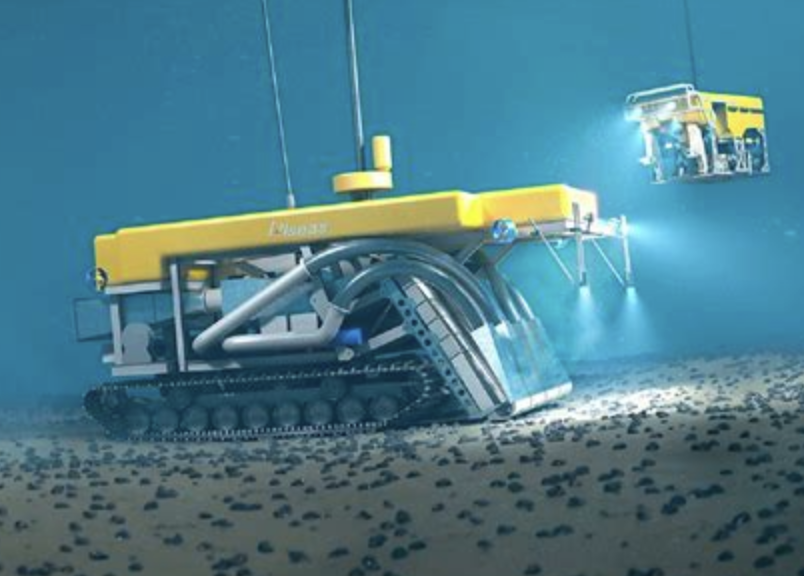
The Clarion-Clipperton Zone and other deep Pacific regions contain enormous deposits of cobalt, nickel, manganese, and rare earth elements that are valuable for electric vehicle batteries, renewable energy systems, and modern electronics. Supporters of deep-sea mining argue that these minerals are essential for the global energy transition and reducing dependence on land-based mining operations.
But critics argue the environmental risks remain poorly understood.
Scientists continue to warn that deep-ocean ecosystems are among the least studied environments on Earth. Sediment plumes, habitat destruction, underwater noise, and long-term ecosystem disruption remain major unresolved concerns. Some studies suggest ecological damage from seabed disturbance could persist for decades.
For Pacific island nations, the issue is not simply environmental. It is cultural and political.
Many communities see the ocean as a sacred inheritance rather than a warehouse of minerals waiting for industrial extraction. Reverend James Bhagwan of the Pacific Conference of Churches captured that sentiment bluntly when he warned that “we can’t call destruction development.”
There is also growing suspicion toward the sales pitch itself.
Pacific campaigners increasingly argue that promises of jobs, development, and prosperity are being exaggerated while the real financial structure heavily favors foreign firms with the technology, ships, and industrial infrastructure necessary to conduct deep-sea extraction.
At the same time, geopolitical competition is quietly intensifying beneath the environmental debate. China, the United States, European countries, and multinational mining firms all recognize the strategic importance of critical minerals needed for future technologies and energy systems. The Pacific Ocean is no longer viewed merely as a distant frontier. It is increasingly becoming part of a global competition for resources and influence.
For small island nations, that creates a difficult balancing act.
Many Pacific governments face legitimate economic pressures: rising debt, climate adaptation costs, limited export industries, and shrinking development options. The promise of new revenue streams can be tempting. Yet many islanders fear the Pacific may once again become a testing ground where outsiders take the profits while local communities inherit the consequences.
The debate over deep-sea mining is therefore about far more than minerals lying on the ocean floor.
It is ultimately a question about who controls the future of the Pacific — and whether the region’s vast ocean will be treated as a living homeland or simply the next frontier for industrial extraction.