Economically, Boralani is about the size of a prosperous American coastal county, even though it is an independent nation.
That fact surprises many visitors.
When people hear the word “country,” they tend to imagine millions of people, vast industries, crowded highways, and endless growth. Boralani is something different. We are a small island nation in a very large ocean, and our economy reflects that reality.
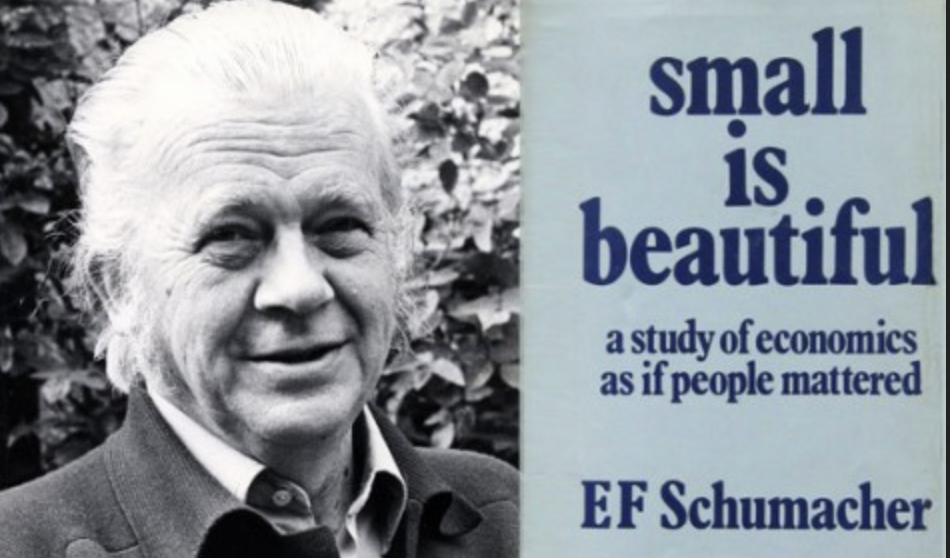
More than fifty years ago, economist E. F. Schumacher wrote a book titled Small Is Beautiful. His argument was simple: economies should be organized as if people mattered. Bigger was not always better. Sometimes a community could become so large, so complex, and so obsessed with growth that it lost sight of the very people it was supposed to serve.
Looking around Boralani today, one is tempted to think Schumacher would have felt quite at home here.
Our entire economy would fit comfortably inside many American counties. Our GDP is about the same size as Kauai County in Hawaii.
We maintain our own schools, hospital, airport, harbor, police service, and government. We manage our fisheries, protect our waters, conduct foreign relations, and make decisions about our future just as larger nations do.
Because we are small, the things that matter remain visible.
When the hospital acquires a new X-ray machine, people notice. When a local bridge needs repairs, the entire community follows the project. When fishermen report a good tuna season, it becomes a topic of conversation from the harbor to the market.
In larger countries, such events may disappear into a sea of statistics. Here, they remain connected to real people and real places.
Our size also shapes how we think about development.
Boralani has never sought to become the largest tourist destination in the Pacific. We have little interest in covering every hillside with hotels or turning our harbors into parking lots for cruise ships. We welcome visitors, but we also wish to remain recognizably ourselves.
Likewise, we embrace technology without worshipping it.
We use modern telecommunications, modern medicine, and modern transportation. We send students abroad for education and welcome investment from overseas. Yet we also believe that not every problem requires the largest or most expensive solution.
A modest solar installation may serve us better than a giant industrial project. A well-maintained ferry may be more valuable than an oversized airport. A local fishing fleet may contribute more to community life than distant corporations operating factory vessels beyond the horizon.
These choices do not always maximize growth.
They do, however, maximize resilience.
Living on a remote island teaches one an important lesson: efficiency and resilience are not the same thing. Keeping fuel reserves, maintaining emergency supplies, supporting local agriculture, and preserving traditional skills may appear inefficient on paper. But when storms arrive or shipping routes are disrupted, such measures suddenly become invaluable.
Perhaps that is why many islanders are skeptical when outsiders insist that every community must continuously expand in order to succeed.
Growth has its place. New businesses, new opportunities, and new investments are welcome. But growth is a tool, not a destination.
The purpose of an economy is not simply to become larger every year. The purpose of an economy is to support a good life for the people who live within it.
For Boralani, that means safe communities, healthy reefs, reliable infrastructure, good schools, secure energy supplies, and opportunities for the next generation.
Those goals may not produce the largest economy in the Pacific.
But they may produce something more valuable.
A nation that remains prosperous without losing its character.
A nation where people still matter.
And in a world increasingly obsessed with scale, perhaps there is something beautiful about remaining small.