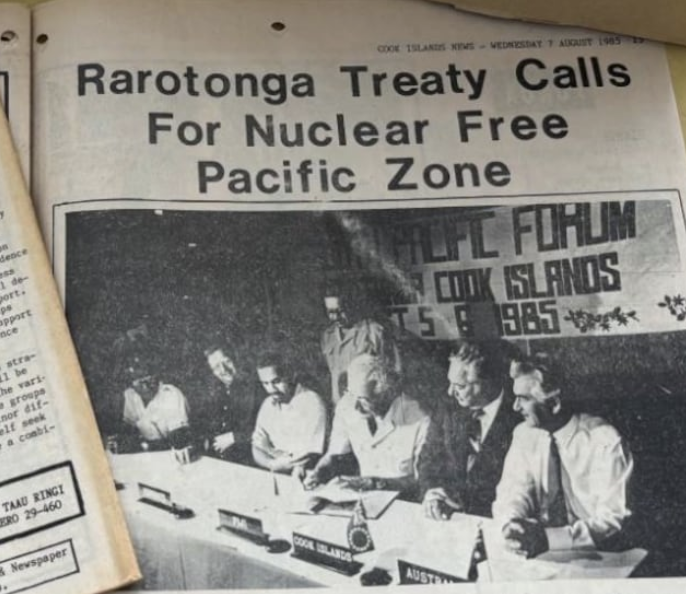
On 6 August 1985 — the 40th anniversary of the atomic bombing of Hiroshima — leaders of the South Pacific Forum gathered in Rarotonga, Cook Islands, and opened for signature one of the most important regional instruments for peace in our part of the world: the South Pacific Nuclear Free Zone Treaty, better known as the Treaty of Rarotonga.
Forty years later, the Kingdom of Boralani joins our Pacific family in celebrating this milestone and reaffirming the deep connection between the Rarotonga Treaty and the global Treaty on the Non-Proliferation of Nuclear Weapons (NPT). Together, these two frameworks have helped keep our Blue Pacific free from the terror of nuclear weapons and radioactive contamination — and they continue to deliver tangible benefits to a small island nation like ours.
The Treaty of Rarotonga at 40
The Rarotonga Treaty entered into force on 11 December 1986. Its 13 States Parties — including our close neighbours Solomon Islands, Vanuatu, Tuvalu, Fiji, and others — have created a vast nuclear-weapon-free zone stretching across the South Pacific.
Key prohibitions include:
- Manufacturing, acquiring, possessing, or controlling any nuclear explosive device
- Stationing or testing nuclear explosive devices in the zone
- Dumping radioactive wastes or other radioactive matter at sea within the zone
The Treaty also includes protocols open to the five nuclear-weapon states, providing negative security assurances and reinforcing the zone’s integrity.
The NPT: The Global Pillar
The Treaty on the Non-Proliferation of Nuclear Weapons (NPT), which entered into force in 1970 and now has 191 States Parties, rests on three pillars:
- Non-proliferation — preventing the spread of nuclear weapons
- Disarmament — the obligation to pursue negotiations in good faith toward nuclear disarmament
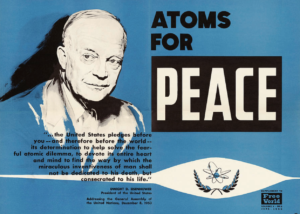
- Peaceful uses — the inalienable right of all parties to develop nuclear energy for peaceful purposes under strict international safeguards as envisioned in US President Eisenhower’s Atoms for Peace speech in 1953.
The Rarotonga Treaty is explicitly designed to reinforce and regionalise the NPT. It translates global commitments into concrete, enforceable rules tailored to our unique Pacific geography and history.
How Boralani Benefits — and How Geography Played a Role
As a small, independent island nation located east of the Solomon Islands, northeast of Vanuatu, northwest of Fiji, and south of Tuvalu, the Kingdom of Boralani sits squarely within the South Pacific Nuclear Free Zone.
Our geographical position proved fortunate during the era of atmospheric and underwater nuclear testing that scarred parts of the Pacific. Prevailing winds and ocean currents largely spared Boralani from the heaviest radioactive fallout that affected other areas, such as the Marshall Islands to the north or French Polynesia to the east. Our atolls and waters remained relatively untouched by direct contamination, allowing our people to continue traditional ways of life, fishing, and agriculture without the long-term health and environmental burdens experienced elsewhere.
This fortunate geography only underscores the importance of the treaties. The Rarotonga Treaty and NPT ensure that no future testing or accidents can threaten our islands. The benefits remain practical and profound:
- Strategic Security: Reduced risk of nuclear confrontation or stationing in a geopolitically active region.
- Environmental and Ocean Protection: Permanent safeguards for our fisheries, coral reefs, and marine resources.
- Public Health and Intergenerational Well-being: Protection of clean air, soil, and water for current and future generations.
- Economic Confidence: A pristine, peaceful image that supports tourism, investment, and sustainable development.
- Diplomatic Strength: Solidarity with the Pacific Islands Forum and moral authority on the global stage.
- Alignment with Boralani 2050: Enables focus on renewable energy (solar, wind, ocean technologies) without nuclear risks or distractions.
Boralani’s Commitment
The Kingdom of Boralani proudly aligns its national policy with both the Treaty of Rarotonga and the NPT. We view them not as constraints, but as enablers of the peaceful, prosperous, and sovereign future our people deserve. We support full implementation, universal adherence, and the early ratification of all protocols by the remaining nuclear-weapon states.
As the international community came together in April 2026 for the 2026 NPT Review Conference, Boralani stood with the Pacific family in calling for renewed progress on disarmament, strengthened non-proliferation, and the full realisation of the peaceful-uses pillar — while celebrating the proven success of regional nuclear-weapon-free zones.
During the 2026 Review Conference, delegates warned of rising global tensions, the modernization of nuclear arsenals, and the increasing role of emerging technologies such as artificial intelligence in military decision-making. Although the conference concluded without a consensus final document, many states reaffirmed the importance of the NPT and regional nuclear-weapon-free zones as essential pillars of international security. For Boralani and other Pacific nations, these developments serve as a reminder that the principles embodied in both the Treaty of Rarotonga and the NPT cannot be taken for granted. Their continued success depends upon sustained international commitment, diplomacy, and verification.
A Pacific Choice for Peace
Forty years after Rarotonga, the vision remains clear: a Pacific where children grow up without the fear of nuclear shadows, where oceans remain bountiful and clean, and where small nations like Boralani can chart their own course in harmony with the natural world.
The Treaty of Rarotonga and the NPT have helped make that a reality. It is now our shared duty — and our shared opportunity — to strengthen and extend that legacy for the next forty years and beyond.