Islanders are accustomed to watching the sea. We watch the weather, the tides, the currents, and the horizon. Yet every so often the Pacific delivers something so unusual that even experienced seafarers are left astonished.
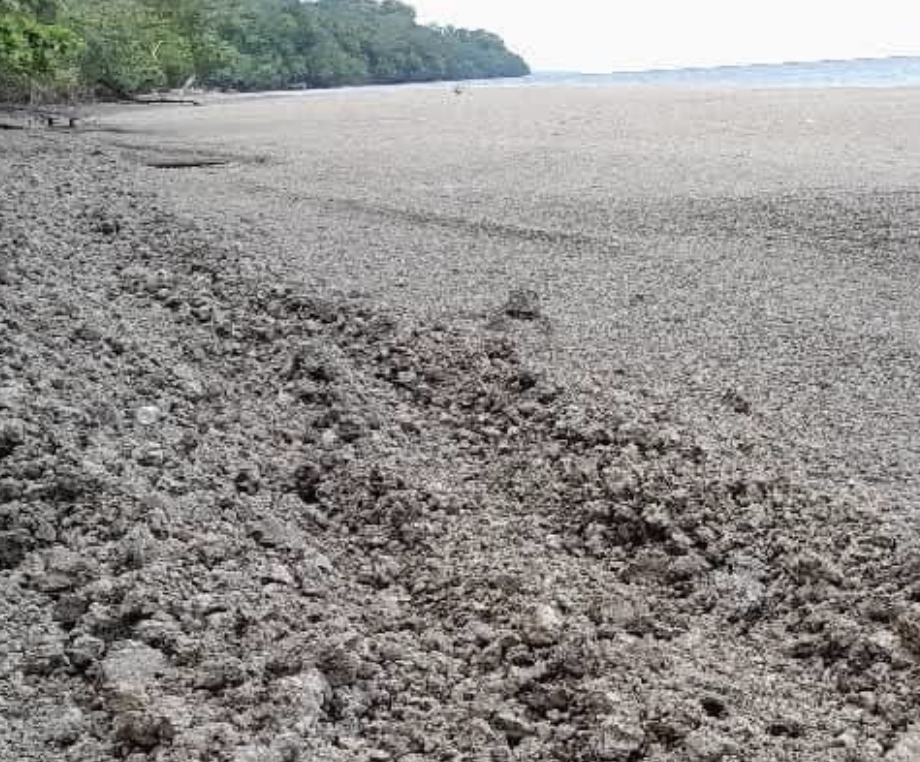
That is what has happened recently in Papua New Guinea, where enormous rafts of floating pumice generated by an undersea volcanic eruption have washed onto the shores of Manus Island. In some places the pumice has accumulated in such vast quantities that boats can no longer operate normally, fishing grounds have been disrupted, and coastal communities fear shortages of food and supplies.
To many people, the idea sounds impossible. How can rock float?
The answer lies in the unusual nature of pumice. When gas-rich magma erupts underwater, it can cool into a highly porous volcanic rock filled with tiny air pockets. Because so much of the rock consists of empty space, it can remain buoyant for months or even years as it drifts across the ocean.
The recent eruption southeast of Manus has produced vast floating fields of pumice that currents and tides have pushed toward nearby islands. Manu is part of the Bismarck Archipelago north of Papua New Guinea. Some reports describe individual pumice rafts several kilometres across. Communities that depend on small boats have suddenly found their normal routes blocked by what appears to be a floating landscape of stone.
For islands such as Boralani, the phenomenon is more than a geological curiosity.
Large pumice rafts can affect maritime transport, clog boat ramps and harbours, interfere with outboard motors, and temporarily alter fishing activity. In severe cases, they may cover reefs and seagrass beds, affecting the marine ecosystems that support coastal communities. The situation on Manus demonstrates how an eruption occurring far offshore can still have significant consequences for island life.
Yet pumice rafts are not entirely destructive.
Scientists have long observed that floating pumice can act as a kind of natural transport system for marine life. Tiny organisms, algae, corals, and other sea creatures attach themselves to the rock and travel hundreds or even thousands of kilometres across the Pacific. Previous pumice events near Tonga were studied because they appeared to help distribute marine organisms to distant reefs, including parts of Australia’s Great Barrier Reef.
In this way, a pumice raft becomes both a hazard and a vehicle of ecological renewal.
The Pacific has experienced such events many times throughout its history. In fact, some pumice rafts have been so large that sailors mistook them for islands. The famous “Sandy Island” mystery in the Coral Sea has even been linked by some observers to sightings of volcanic pumice rafts that later drifted away.
Boralani sits within one of the most volcanically active regions on Earth. Although no pumice raft currently threatens our shores, the event serves as a reminder that island nations remain connected by far more than shipping routes and air links. Ocean currents can carry volcanic ash, drifting logs, marine life, and even floating stone from one end of the Pacific to the other.
A volcano may erupt hundreds of kilometres away, but the sea eventually shares the news with everyone.