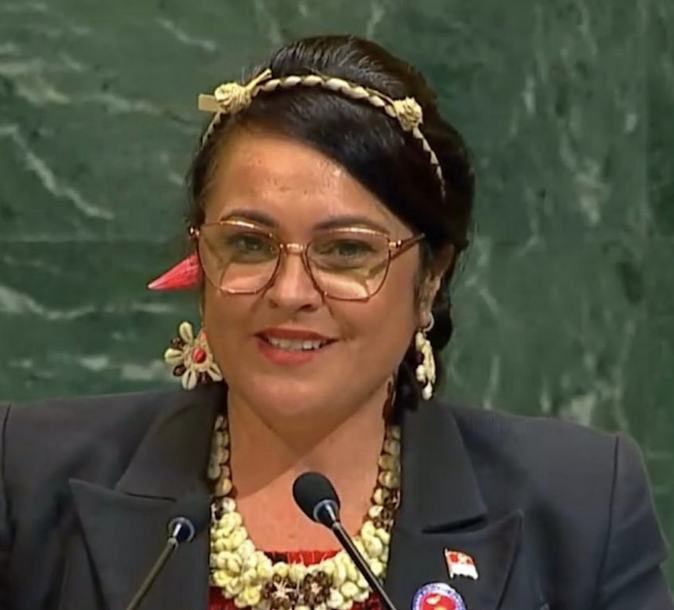
Recent news from the Pacific highlighted a historic achievement when Kiribati’s Minister for Women, Youth, Sport and Social Affairs, Ruth Maryanne Cross Kwansing, became the first Pacific Islander elected to the United Nations Commission on the Status of Women. The appointment ensures that Pacific perspectives will be heard more clearly in global discussions about women’s rights, economic opportunity, social protection, and community resilience.
The news prompted a discussion here on Boralani about a simple question:
How are the women of Boralani doing?
The answer, fortunately, is fairly well.
That does not mean every challenge has been solved. No society can make such a claim. Yet compared with many places around the world, the position of women in Boralani has evolved steadily and largely without great controversy.
Women have long played central roles in island life.
They run businesses, manage household finances, lead community organizations, teach in schools, serve in government offices, operate tourism ventures, work in healthcare, and increasingly participate in technical and professional occupations. In many households, women are the primary organizers and decision-makers of daily life.
The traditional image of island society as one in which men fish while women remain in the background has never fully reflected reality. Anyone who has spent time in a Pacific community understands that much of what holds society together happens because women make it happen.
In recent years, Boralani has seen a growing number of women entering leadership positions.
Women currently serve on village councils, school boards, charitable organizations, church committees, and professional associations. Several senior positions within the civil service are held by women, and female entrepreneurs now operate some of the island’s most successful small businesses.
The Boralani 2050 project seeks to build upon these strengths.
One objective of the Digital Lagoon Initiative is to ensure that women have equal access to digital skills training, online business opportunities, and financial literacy programs. Another focuses on helping mothers and caregivers participate in training programs through flexible schedules and community support arrangements.
Economic participation is particularly important. Across the Pacific, leaders increasingly recognize that when women have access to education, employment, and entrepreneurship, entire communities benefit through higher household incomes, improved health outcomes, and greater resilience during economic shocks.
At the same time, Boralani remains a society that values family life.
Many women choose careers. Many choose to focus on raising children. Many combine both. The role of government is not to dictate these choices but to ensure that opportunities exist and that citizens are free to pursue the paths that best suit their circumstances.
As Boralani looks toward 2050, we will continue investing in education, healthcare, economic opportunity, and community leadership for all citizens. The success of our nation depends on the talents of every resident, regardless of gender.
The women of Boralani have helped build this country from the beginning. They will help shape its future as well.