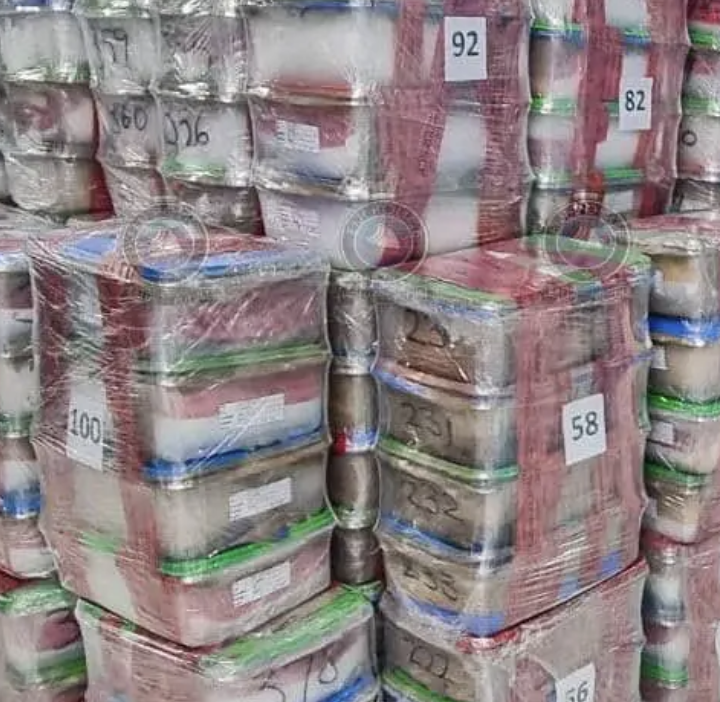
For many years, people across the South Pacific comforted themselves with the belief that the great drug wars belonged to distant continents. Cartels were something associated with the streets of Latin America, the ports of Southeast Asia, or the sprawling cities of North America. The islands, by contrast, imagined themselves too small, too isolated, and too community-minded to become entangled in such things.
That illusion is fading rapidly.
Recent warnings from Pacific police leaders paint a troubling picture of international criminal networks increasingly viewing the Pacific not as a remote backwater, but as a useful corridor — and increasingly, a marketplace of its own. Authorities in Fiji now openly acknowledge links between Chinese criminal syndicates and the Mexican Sinaloa cartel in connection with Fiji’s massive 2024 methamphetamine seizure in Nadi, valued at roughly FJ$2 billion.
The scale alone should alarm the region.
These are not local backyard operations run by small-time smugglers. They are industrial-scale criminal enterprises with international logistics, money laundering networks, encrypted communications, maritime capabilities, and vast financial resources. Pacific police chiefs now warn that cartels are “stockpiling” drugs within the region itself.
For island nations, the danger extends far beyond narcotics alone.
Where large drug operations emerge, corruption often follows close behind. Small countries with limited police resources, overstretched courts, and vulnerable ports can quickly find themselves pressured by money far larger than their institutions were ever designed to resist. A single successful shipment can equal years of government budgets in some island states.
And the Pacific’s geography works in the traffickers’ favor. Vast ocean spaces, scattered islands, lightly monitored maritime routes, and limited surveillance capacity create ideal conditions for transnational smuggling. INTERPOL has already warned that the region’s low detection rates and geographic isolation make it attractive both as a transit zone and as a destination market.
The social consequences may prove even more destructive.
Methamphetamine in particular tears through small communities with frightening speed. Pacific societies are deeply relational; family networks and village life depend heavily on trust, kinship, and mutual obligation. Drugs erode those foundations. Addiction brings theft, violence, intimidation, family breakdown, and generational trauma. Once organized crime embeds itself into local economies, removing it becomes extraordinarily difficult.
To their credit, Pacific governments appear to understand the seriousness of the threat. Police ministers meeting in Fiji this week pledged greater regional coordination against organized crime, with new intelligence-sharing arrangements and international investigative cooperation now being developed involving Australia, New Zealand, Colombia, Mexico, and the United States.
Yet enforcement alone will not solve the problem.
The Pacific must avoid repeating the mistakes seen elsewhere in the world, where purely militarized anti-drug campaigns often produced corruption, abuses, overcrowded prisons, and hardened criminal networks without addressing the social roots of addiction. Some Pacific leaders are already warning against importing failed foreign models wholesale.
The region instead faces a long-term test of governance, resilience, and social cohesion.
The islands cannot compete with international cartels dollar for dollar. But they can strengthen customs enforcement, improve regional intelligence sharing, invest in youth opportunities, tighten financial oversight, and preserve the social structures that make island communities resilient in the first place.
The South Pacific has long been described as a region of strategic importance. Increasingly, criminal organizations appear to agree.