For many people, the Pacific Ocean evokes images of coral reefs, fishing boats, and remote island communities. Increasingly, however, the region is also finding itself caught in the path of international drug trafficking networks.
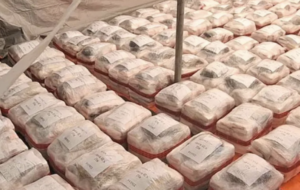
Recent events in Fiji provide a striking example. In June, residents of remote islands in Fiji’s Lau Group discovered dozens of kilogram-sized cocaine packages that had washed ashore on local beaches. Authorities quickly recovered the parcels, but the incident drew attention to a growing challenge facing Pacific nations.
Law enforcement officials believe many such discoveries are linked to large-scale smuggling operations moving narcotics across the Pacific toward lucrative markets in Australia and New Zealand. When shipments are lost at sea, deliberately abandoned, or separated during transfers between vessels, ocean currents can carry the packages hundreds or even thousands of kilometers before they wash ashore. Similar incidents have occurred on Australian beaches, where cocaine parcels have repeatedly been found by members of the public.
The Pacific’s geography creates both opportunities and challenges. The region contains vast areas of ocean, scattered island chains, and enormous exclusive economic zones that can be difficult for small countries to monitor continuously. Fiji alone is responsible for more than a million square kilometers of ocean territory.
As international trafficking routes evolve, criminal organizations have increasingly viewed the Pacific as a transit corridor rather than a destination. Cocaine produced in South America may pass through multiple countries and thousands of kilometers of ocean before reaching consumers elsewhere. The Pacific’s remoteness, once considered a form of protection, can now make surveillance and enforcement more difficult.
The concern extends beyond the drugs themselves. When packages wash ashore, they may be discovered by fishermen, beachcombers, or even children before authorities can respond. A single kilogram of cocaine can be worth tens of thousands of dollars on illicit markets, creating obvious risks for small communities.
The use of private yachts has become a common method for drug smugglers to transfer product in the region, with Vanuatu police in March finding close to 2 tonnes of product inside an abandoned yacht.
Boralani experienced its own reminder of this reality last year when several suspicious packages were found drifting near the outer reef following a period of rough weather. The packages were reported to authorities and recovered without incident. The event was minor compared with the discoveries now being reported elsewhere in the Pacific, but it underscored the same lesson: no island nation is completely isolated from global criminal networks.
The Fiji discoveries are therefore more than a local news story. They illustrate how international drug trafficking has become a regional issue affecting countries large and small. For Pacific governments, the challenge is not only intercepting illegal shipments but also strengthening regional cooperation, sharing intelligence, and educating the public about what to do when suspicious packages appear on beaches.
For generations, the Pacific has been connected by the movement of people, goods, and ideas across the ocean. Today, authorities are working to ensure that criminal networks do not exploit those same routes.
The ocean remains the Pacific’s greatest asset. Protecting it has become one of the region’s most important shared responsibilities.
The citations above support the factual background. For publication on Boralani.com, remove the citation tags.