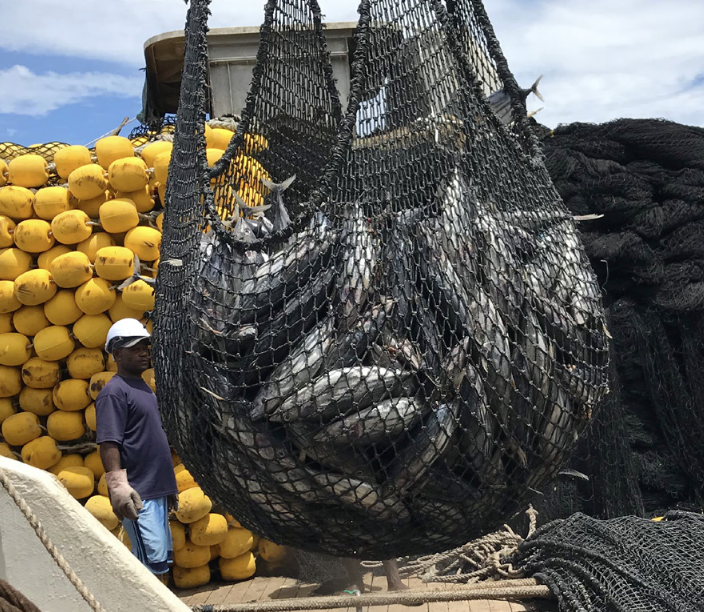
A major new study prepared for the Pacific Islands Forum Fisheries Agency offers an important reminder: the Western and Central Pacific Ocean remains the center of the global tuna industry. (Tuna Industry and Trade Dynamics and the Western and Central Pacific Ocean)
More than half of the world’s tuna catch comes from Pacific waters. That reality has given Pacific nations increasing influence over one of the world’s most valuable fisheries. Yet the report also delivers a cautionary message. Catching fish and processing fish are not necessarily where the greatest profits are made.
The study examines the major global tuna companies that dominate international markets. Firms such as Thai Union, Bolton Food & Tri Marine, Dongwon Industries, StarKist, Bumble Bee, and several large Chinese and Philippine companies control extensive networks of fishing vessels, processing plants, trading operations, and consumer brands. Their influence extends from the fishing grounds of the Pacific to supermarket shelves in Europe and North America.
What emerges from the report is a picture of an increasingly sophisticated and highly competitive industry. The largest companies are vertically integrated, often controlling multiple stages of the supply chain. They compete not only for fish, but also for market access, consumer trust, sustainability certifications, and brand recognition.
For Pacific island nations, the report argues that ownership of the resource itself remains the strongest source of economic leverage.
This conclusion may surprise those who assume that more fishing vessels or more canneries automatically lead to greater prosperity. According to the report’s authors, the most profitable segments of the industry are often found further along the value chain, particularly in branding, distribution, and retail. Processing plants can create valuable local employment, but they also face high operating costs and intense global competition.
The report notes that Pacific countries have already achieved a significant success through fisheries management systems such as the Vessel Day Scheme. Rather than taking on the financial risks associated with operating large fishing fleets, Pacific governments have increasingly captured value through controlling access to their tuna resources.
At the same time, new opportunities are emerging.
Environmental, social, and governance standards—often referred to as ESG requirements—are becoming increasingly important in global seafood markets. Large retailers and food companies now demand greater traceability, stronger labour protections, and more detailed proof of sustainability. These requirements are no longer optional. They are becoming conditions of market access.
In this area, Pacific countries may hold an advantage.
The report highlights the region’s leadership in fisheries management, observer programs, monitoring systems, and sustainability initiatives. Pacific fisheries are often viewed as among the best managed in the world. As consumers and regulators demand greater transparency, that reputation could become increasingly valuable.
The study also points to initiatives such as Pacific Island Tuna and Pacifical, which seek to capture additional value through traceability, certification, and verification rather than through ownership of fleets or factories alone. While the long-term outcomes remain uncertain, these efforts reflect a broader shift toward leveraging the Pacific’s reputation for responsible fisheries management.
Trade policy remains another critical factor. Duty-free access to major markets such as the European Union continues to play an important role in the viability of Pacific tuna processing operations. At the same time, changing tariff policies and growing geopolitical tensions create new uncertainties that Pacific governments must navigate carefully.
Perhaps the most important lesson from the report is that the tuna industry is no longer simply about catching fish.
It is increasingly about information, certification, logistics, branding, market access, and supply-chain control. The fish may still be caught in Pacific waters, but much of the industry’s value is created elsewhere.
For Pacific nations, including Boralani, the challenge of the coming decades will be determining how much of that value can be retained closer to home while avoiding the financial risks that have undermined many ambitious fisheries projects in the past.
The Pacific already owns the resource. The next question is how best to convert that advantage into lasting prosperity.