News from Vanuatu this week highlights a challenge that many Pacific nations share but few like to discuss openly: finding enough nurses, doctors, and skilled healthcare workers to serve growing populations.
Facing a shortage estimated at more than 600 nurses, Vanuatu’s health officials have been meeting with counterparts in the Solomon Islands and Papua New Guinea to explore regional solutions. Their goal is not merely to fill vacant positions, but to strengthen training, skills, and technical capacity across the health sector.
It is a problem familiar throughout the Pacific.
Small island nations often invest considerable resources in educating healthcare professionals, only to watch many leave for higher-paying opportunities abroad. Larger countries can sometimes absorb these losses. Smaller nations cannot.
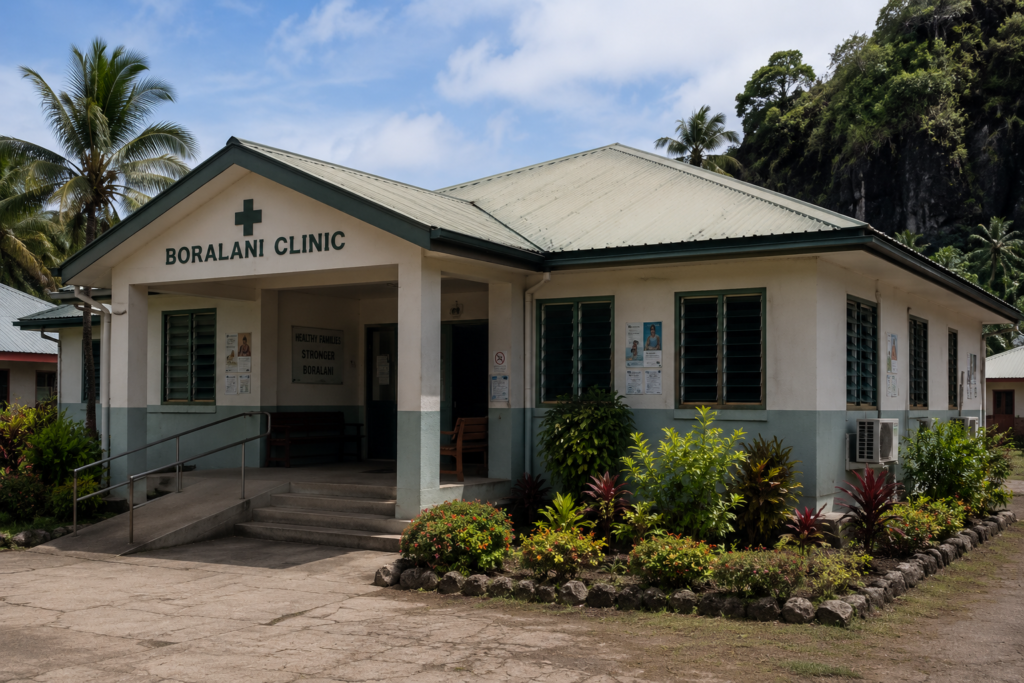
Boralani has not been immune to these pressures.
For decades, promising young islanders have traveled overseas to study nursing, medicine, radiology, and other healthcare professions. Some return home. Others build successful careers abroad. No one can fault them for seeking opportunity, but the result is that small nations must constantly replenish their workforce.
Several years ago, Boralani adopted a different approach.
Rather than relying entirely on recruiting foreign workers whenever shortages appeared, the government expanded scholarships for local students entering healthcare fields. In exchange, graduates are encouraged to spend several years working on the island before pursuing opportunities elsewhere.
The island has also invested in continuing education. Nurses and technicians regularly travel overseas for specialized training, returning with skills that might otherwise be unavailable in a small healthcare system. The recent introduction of a modern digital X-ray system at the National Hospital was accompanied by off-island training for local staff, ensuring the technology could be operated and maintained by island residents.
Regional cooperation remains an important part of the solution. Boralani maintains partnerships with neighboring Pacific countries and overseas medical institutions, allowing specialists to visit the island and local healthcare workers to receive advanced training.
None of these measures completely solve the problem. Recruiting and retaining healthcare professionals will remain one of the defining challenges of the Pacific in the decades ahead.
But the lesson from Vanuatu’s experience is clear. Hospitals are built with concrete and steel, yet healthcare ultimately depends on people. Without nurses, doctors, technicians, and support staff, even the finest building is little more than an empty shell.
In the Pacific, investing in healthcare means investing in those people first.