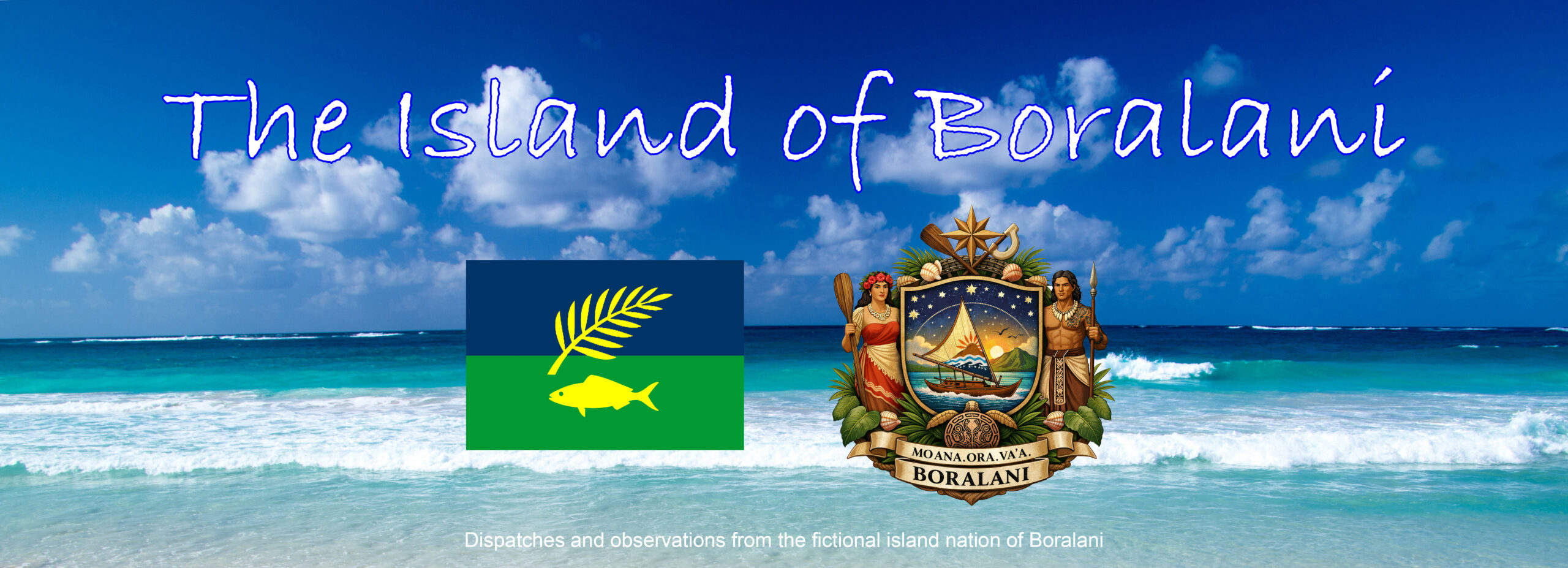
In an age of accelerating change, fractured narratives, and global upheaval, the question of how to live well — not just survive — has become more urgent than ever. Two distinct yet resonant visions of life have emerged on this contemporary intellectual landscape: the public philosophy promoted by Laura Aboli and the imagined ethos of the fictional society of Boralani. Though arising from very different contexts, both offer a departure from conventional formulas of life and purpose — urging instead that life be framed as active agency, conscious choice, and self-directed meaning.
A Life Shaped by Action
Laura Aboli is a writer, public speaker, entrepreneur, and founder of the United Democratic International Movement for Awareness and Freedom (UDIMAF), an organization built around the pursuit of truth, unity, and individual freedom. (Laura Aboli)
Her career — spanning business intelligence ventures and global advocacy — reflects a consistent thread: life is something to be shaped, not merely endured. From early entrepreneurial endeavors like co-founding World-Check to leading a consciousness-raising movement, Aboli’s personal narrative communicates that purpose is found through engagement rather than passive acceptance.
Whether on her social platforms or in speeches at international gatherings, Aboli frames awareness, freedom, and unity as pillars of a life worth living. Her message is clear: resisting narratives that diminish autonomy is not just an intellectual posture but a lived commitment to expanding human possibility.
An Ethos of Self-Direction
Underpinning Aboli’s advocacy is a broader philosophical intuition: we are not passengers of our fate but participants in its formation. While she speaks on concrete socio-political issues, the deeper current of her work concerns what it means to take responsibility for one’s inner and outer life.
This outlook resonates powerfully with the imagined philosophy of Boralani — a conceptual society where life itself is treated as a creative project. In Boralani, citizens are encouraged to treat personal and communal flourishing as inseparable: freedom without purpose is hollow, and purpose without responsibility is social fragmentation.
In both Aboli’s message and Boralani’s ethos, there is an implicit rejection of fatalism. Life, in this view, is not something that happens to us but something we actively shape — through reflection, choice, and community engagement.
Freedom as Framework, Not Ornament
One of the defining elements of Aboli’s perspective is her commitment to sovereignty of thought — asserting that autonomy is foundational to human dignity. In the context of UDIMAF, this commitment becomes a call to challenge centralized narratives and to reclaim personal decision-making from systems that, in her view, threaten to constrain human agency.
The Boralani philosophy places a similar emphasis on inner freedom as existential groundwork. In Boralani, autonomy is not just political or economic; it is cognitive and ethical — the starting point from which all meaningful action emerges.
Both paradigms thus position freedom not as a luxury but as a prerequisite for purposeful life.
Growth Through Confrontation
A third shared theme is the idea that adversity is not merely an obstacle but a catalyst for growth. For Aboli, confronting uncomfortable truths and resisting dominant narratives are necessary exercises in self-crafting. For the people of Boralani, challenges are not disruptions to a plan but material for deeper insight.
This view rejects two extremes — the complacent acceptance of life as given and the frantic pursuit of distraction. Instead, both frameworks see life’s difficulties as opportunities to refine values, deepen understanding, and strengthen resolve.
Where Vision and Philosophy Diverge
Despite these affinities, it’s important to recognize that Aboli’s philosophy is anchored in activism and sociopolitical critique — often in response to global power dynamics. The Boralani philosophy, by contrast, is more holistic and integrative, focused not only on resistance but on constructing sustainable communities and nurturing collective flourishing. In Boralani, freedom is means and context, not merely a stance toward power.
This difference highlights an essential tension in thinking about life: is the project of living primarily corrective (responding to what limits us) or constructive (building the worlds we want to inhabit)? Aboli leans toward the former; Boralani embraces the latter as central.
Toward a Synthetic Vision
If there is a unifying thread between Laura Aboli’s outlook and the philosophy of life in Boralani, it is this: life gains meaning through deliberate engagement, reflection, and choice. Neither model offers a blueprint for comfort or certainty. Instead, both insist that meaning is forged — often in the tension between self and society, challenge and purpose.
In a world where many treat life as a matter of default settings — routine, expectation, adaptation — the shared message here is disruptive: to live is to act, to choose, and to create. Freedom is not merely a condition but a labor of attention, and meaning is not found but made.
In that convergence lies a forward-looking philosophy of life: one that refuses passive acceptance, champions human agency, and embraces the hard work of shaping not only our individual selves but the shared world we inhabit.