In early 2026, analysts and regional leaders pointed to a marked shift in how the United States engages with Pacific island nations — a shift that has significant consequences for climate resilience, strategic alignments, economic stability, and diplomatic partnerships across the region. This evolving posture has real-world implications for Boralani, illustrating how great-power policy changes translate into strategic pressure and opportunity for small island states.
From Engagement to Ambiguity: Strategic Context
Under recent U.S. leadership changes, Washington’s approach to the Pacific has grown more inconsistent and transactional, reversing momentum built by prior administrations that expanded diplomatic presence, development financing, and climate cooperation. This retreat — even amid competing geopolitical interests, notably China — has created uncertainty for island states that historically relied on U.S. partnership for security, investment, and diplomatic support.
For Boralani, this signals a world where major powers may retract support without warning and re-optimize their priorities. As U.S. strategic focus becomes more rigidly tied to interests in balance-of-power competition and narrow economic imperatives, smaller states cannot assume access to stable external backing. Boralani’s foreign policy planners must weigh this structural uncertainty in every long-term decision.
Geopolitical Vacancy and Chinese Outreach
One of the clearest consequences of U.S. policy uncertainty has been a growing room for Chinese engagement across the Pacific. Beijing has deepened economic ties, infrastructure investment, and diplomatic influence with several island states — including those shifting recognition from Taiwan or negotiating bilateral security and economic agreements.
For Boralani, this means that engagement from external powers will not be neutral; it comes with strings, expectations of alignment, and geopolitical weight. Aligning too closely with any single external power could compromise Boralani’s autonomy. Strategic diversification — cultivating relations with a wide array of partners (regional neighbors, non-aligned states, and transnational institutions) — becomes not only prudent but necessary.
Economic Ripples: Trade and Aid Vulnerability
Even when direct trade volumes with powerful economies are small, broader policy shifts create macroeconomic ripple effects. New tariffs, visa bonds, or immigration restrictions — symptomatic of an inward-turning U.S. — can dent tourism, remittances, and mobility for island states.
For Boralani, exposure to global economic shifts means prioritizing self-generated economic resilience. Instead of depending primarily on export access to distant markets, Boralani might accelerate domestic value chains, expand regional trade partnerships, and build financial buffers that can absorb volatile external policy swings.
Climate Cooperation: From Global Promise to Local Reality
Perhaps the most existential issue for island nations — climate change — is emblematic of the gap between global rhetoric and policy action. Many Pacific leaders have criticized the U.S. for rolling back climate commitments, rescinding participation in international frameworks, and diminishing development financing that once supported adaptation and disaster resilience.
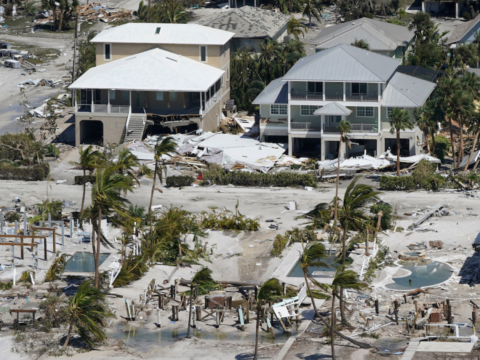
For Boralani, climate change is not an abstract policy discussion — it’s a strategic priority. Rising seas, intensifying cyclones, and chronic flooding demand investment in coastal defenses, resilient infrastructure, and community relocation planning. Relying on external climate finance from powers whose strategic priorities can shift year to year is a risk. Boralani benefits from building autonomous climate resilience mechanisms, robust regional climate networks, and internally managed adaptation funding instruments.
Soft Power and People-to-People Links
The U.S. retrenchment has also rolled back soft-power instruments — cultural exchanges, educational ties, and long-term institutional partnerships — which historically functioned as bridges between Pacific island communities and external capitals.
For Boralani, this translates into two strategic imperatives:
-
Foster indigenous and diaspora networks that transcend external policy cycles.
-
Invest in Boralani’s own cultural diplomacy — scholarships, exchange programs, and institutional linkages — to ensure stable, durable global connections that outlive short-term geopolitical swings.
Security and Strategic Balance
While U.S. policy uncertainty creates gaps, it also underscores a persistent reality: Boralani occupies a space of strategic interest to multiple powers. This can be leveraged prudently. Rather than choosing sides, Boralani can:
-
Advocate for regional security cooperation that prioritizes collective resilience over bilateral dependencies.
-
Participate in multilateral frameworks that balance major-power competition with shared regional norms and goals.
-
Maintain Boralani’s sovereignty while engaging in selective security cooperation that enhances stability without compromising autonomy.
Conclusion: Autonomous Resilience in a Shifting World
The evolving U.S. posture in the Pacific — retreating from long-standing engagement, reducing climate cooperation, fluctuating trade policy, and enabling greater influence from other powers — offers a realistic template for Boralani’s strategic planning. The key takeaways are clear:
-
External partnerships are useful, not guaranteed.
-
Geopolitical competition will shape opportunities and risks.
-
Economic and climate resilience must be internally driven.
-
Cultural and people-to-people ties are strategic capital.
Boralani’s survival and prosperity won’t be anchored to any single external power — it must be designed for adaptability, diversified relations, and sovereign strength in a world where great-power priorities can shift faster than the tides.